
Pigmentation Treatment in Noida: Causes, Types & Effective Treatment Options
Pigmentation is one of the most common skin concerns among people in India. Dark patches, uneven skin tone, acne marks and sun-induced pigmentation can affect the appearance of the skin and often become difficult to manage with home remedies alone.
The good news is that pigmentation can often be improved with the right combination of skincare, medical treatments and professional dermatological guidance.
If you are looking for pigmentation treatment in Noida, understanding the cause and type of pigmentation is the first step toward choosing the right treatment.
What Is Skin Pigmentation?
Skin pigmentation refers to a change in the natural colour of the skin caused by increased or uneven production of melanin, the pigment responsible for skin colour.
When melanin production increases in certain areas, the skin may develop dark spots, patches or an uneven complexion. Pigmentation can appear on the face, forehead, cheeks, upper lip, neck and other sun-exposed areas.
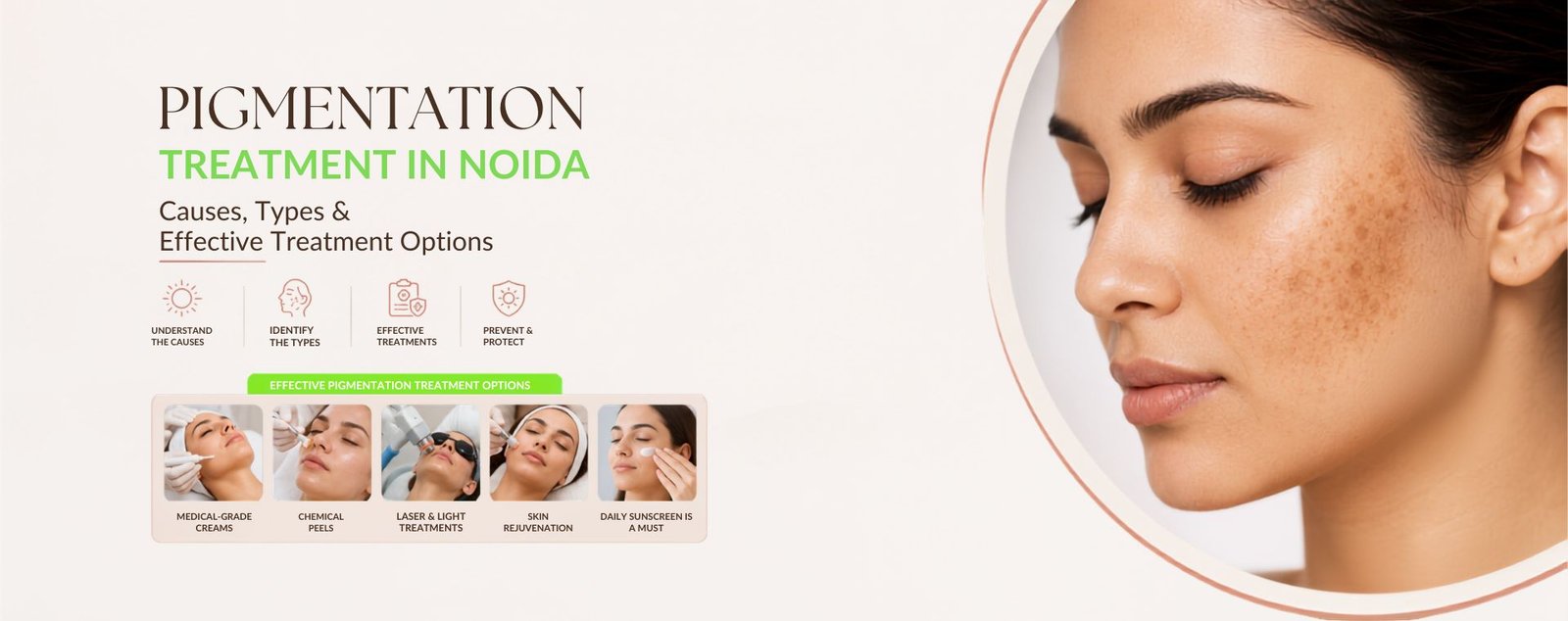
Common Types of Pigmentation
Different types of pigmentation require different approaches. Some of the most common include:
1. Melasma
Melasma causes brown or greyish patches, commonly on the cheeks, forehead, nose and upper lip. Sun exposure and hormonal changes can contribute to melasma.
2. Post-Acne Pigmentation
Dark spots can remain after acne or pimples have healed. These marks are known as post-inflammatory hyperpigmentation and may gradually fade with appropriate care.
3. Sun Spots
Long-term exposure to UV radiation can lead to dark spots and an uneven skin tone, particularly on areas such as the face, hands and neck.
4. Post-Inflammatory Pigmentation
Skin inflammation caused by acne, irritation, injuries or certain skin conditions can sometimes leave darker patches behind.
5. Uneven Skin Tone
Repeated sun exposure, inflammation and other factors can result in an overall uneven complexion.
What Causes Pigmentation?
Pigmentation can have several causes, including:
- Excessive sun exposure
- Hormonal changes
- Acne and skin inflammation
- Post-inflammatory changes
- Certain medications
- Skin irritation
- Genetics
- Inadequate sun protection
- Hormonal conditions such as melasma
Identifying the underlying cause is important because treating pigmentation without addressing its trigger may lead to recurrence.
Effective Pigmentation Treatment Options
The appropriate treatment depends on the type, depth and cause of pigmentation, along with your individual skin type.
A dermatologist may recommend one or a combination of the following:
1. Prescription & Medical-Grade Creams
Depending on the condition, dermatologists may recommend topical treatments containing ingredients that help reduce excess pigmentation and improve skin tone.
These treatments should ideally be used under professional guidance, as inappropriate use of strong pigmentation creams can cause irritation or worsen certain types of pigmentation.
2. Chemical Peels
Chemical peels use carefully selected exfoliating agents to remove damaged outer layers of skin and encourage skin renewal.
They may help improve:
- Pigmentation
- Acne marks
- Uneven skin tone
- Dullness
- Mild sun damage
The type and strength of peel should be selected according to the patient’s skin condition and sensitivity.
3. Laser & Light-Based Treatments
Certain laser and light-based technologies may be considered for specific types of pigmentation.
These treatments work by targeting excess pigment and can help improve the appearance of stubborn pigmentation when appropriately selected.
However, not every pigmentation problem should be treated with a laser. A dermatologist should first determine whether the treatment is suitable for your skin and condition.
4. Skin Rejuvenation Treatments
Depending on the patient’s concerns, dermatologists may recommend treatments designed to improve overall skin texture, brightness and pigmentation.
A customised treatment plan can sometimes combine professional procedures with a suitable home-care routine.
Why Does Pigmentation Come Back?
One of the biggest challenges with pigmentation is recurrence.
Even after successful treatment, pigmentation may return if the underlying triggers continue. UV exposure, hormonal factors, inflammation and inadequate sun protection can all contribute to recurrence.
This is why pigmentation management isn’t only about treating existing dark patches—it also involves preventing new pigmentation from developing.
Importance of Sunscreen During Pigmentation Treatment
Sunscreen is an essential part of pigmentation management.
UV exposure can stimulate melanin production and make pigmentation more noticeable. Daily use of a broad-spectrum sunscreen with appropriate SPF, along with other sun-protection measures, can help protect the skin.
For people dealing with pigmentation, sunscreen should generally be used consistently, including on days when you spend limited time outdoors.
How to Prevent Pigmentation
Some simple habits can help reduce the risk of pigmentation:
- Apply sunscreen every day.
- Reapply sunscreen when required, especially during prolonged outdoor exposure.
- Avoid unnecessary direct sun exposure.
- Don’t pick or squeeze acne.
- Use gentle skincare products.
- Avoid harsh scrubbing.
- Treat acne and skin inflammation early.
- Follow a dermatologist-recommended skincare routine.
When Should You See a Dermatologist?
You should consider consulting a dermatologist if pigmentation:
- Persists despite a consistent skincare routine
- Keeps getting darker
- Frequently returns
- Appears suddenly or changes rapidly
- Is associated with irritation or other skin symptoms
- Is affecting your confidence
A dermatologist can assess your skin and determine the likely cause before recommending a treatment plan.
Pigmentation Treatment in Noida at La Fameux Derma Clinic
At La Fameux Derma Clinic, pigmentation concerns can be assessed by a dermatologist to understand the underlying cause and determine an appropriate treatment approach.
Depending on your skin condition, treatment may involve medical skincare, chemical peels, laser-based procedures or a combination of treatments.
The goal is not simply to make the skin look lighter, but to reduce unwanted pigmentation, improve skin tone and maintain healthier-looking skin through a personalised treatment plan.
If you are searching for pigmentation treatment in Noida, consult a qualified dermatologist before starting any strong pigmentation treatment or procedure.
Frequently Asked Questions
Q. Can pigmentation be completely removed?
Pigmentation can often be significantly improved, but the outcome depends on its cause, type, depth and individual skin characteristics. Some conditions, such as melasma, may require long-term maintenance.
Q. How long does pigmentation treatment take to show results?
Results vary depending on the type of pigmentation and treatment used. Some patients may notice improvement within a few weeks, while deeper or recurrent pigmentation may require several sessions or longer-term management.
Q. Is laser treatment safe for pigmentation?
Certain laser treatments can be used for selected pigmentation concerns. However, the appropriate technology and settings depend on the individual’s skin type and condition. A dermatologist should evaluate the skin before treatment.
Q. Can pigmentation return after treatment?
Yes. Pigmentation can recur, particularly when triggers such as sun exposure or hormonal factors continue. Consistent sun protection and maintenance skincare are important.
Q. Which pigmentation treatment is best?
There is no single best treatment for everyone. The right option depends on whether the pigmentation is melasma, acne-related, sun-induced or another type. A dermatologist can recommend the most appropriate treatment after evaluating your skin.